

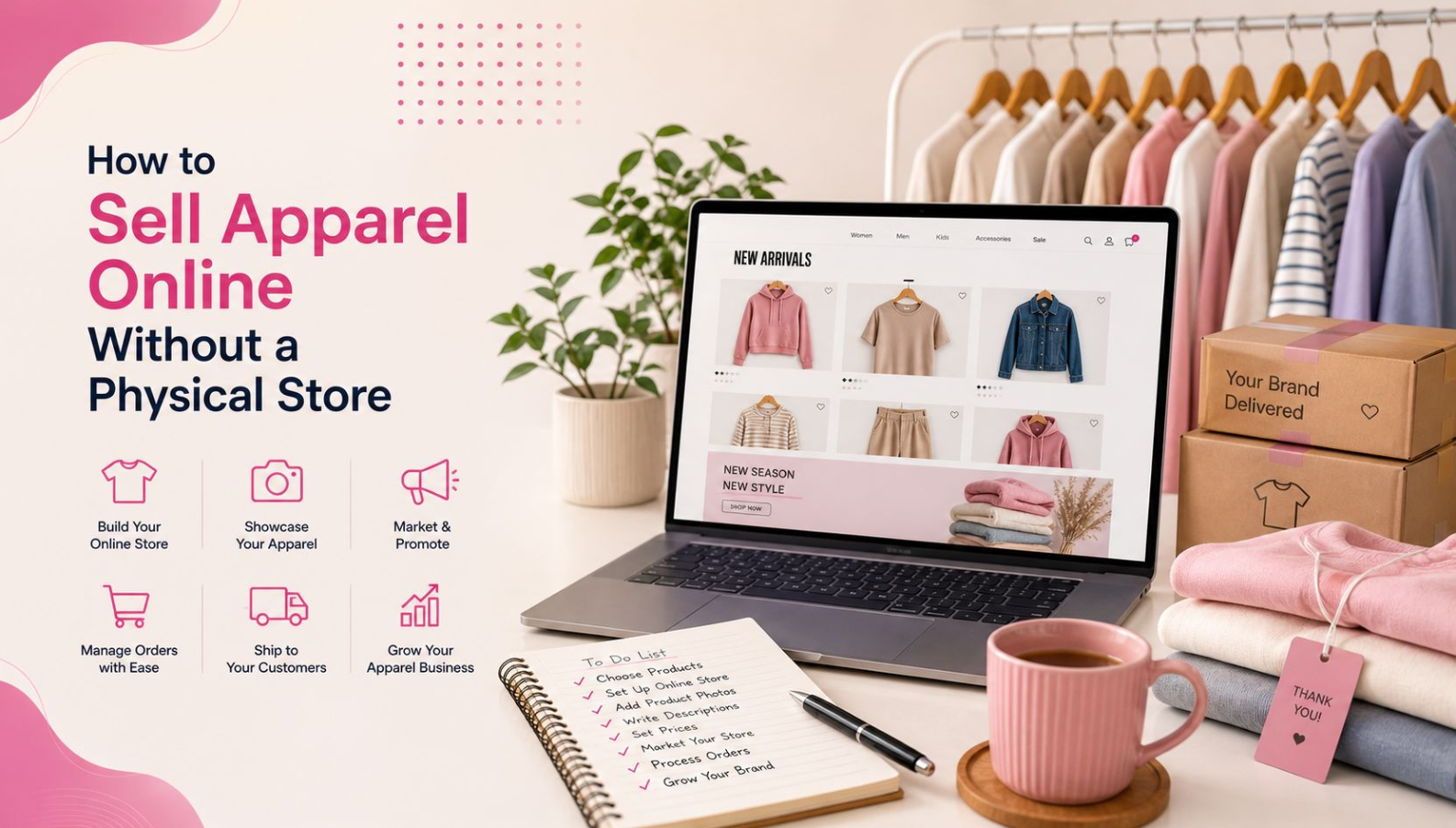
How to Sell Apparel Online Without a Physical Store
Do you want to start a brand? For that, surprisingly, you don’t need a shop, a lease, or a lot of savings to start a clothing business. A phone, a laptop, and a simple plan will get you very far. Selling apparel online lets you test your ideas without much expense, helps you know what people actually ask for, and grows at a pace that suits you. Here’s how to go from a rough idea to your first repeat customer.
Start With One Clear Idea and a Small Budget
An excellent brand starts from the very first principles of focus. Instead of covering a large group of people, try to select a particular group of people and one problem you can help them solve. For summer, it can be light cotton shirts, or professional attire and students school uniforms. When it comes to photography and overall understanding of clothes concept, cohesive concept works much better. After figuring out the concept of cooperation of your clothing brand, figuring out from where to source clothes is next needed task. When choosing, make sure to place a small order first. A modest first run lets you see what sells without tying up your income with failed stock.
Pick the Right Place to Show Your Clothes
How you sell, interact, and acknowledge the customers, and how customers find you, can help you gain trust. You can build your own website, list your business on a marketplace such as Bagzag, or do both. Compare the efforts for the setup, the costs, the audience you’d reach, and how much control you’d have over your branding and customer details. Many beginners find that selling apparel online goes more smoothly when they start on a single channel and learn it well before adding another.
BagZag is the platform you have to study in depth. Before embarking on your search, you should learn the sellers’ requirements and terms and conditions, which may vary from one platform to another.
Learn What Your Shoppers Actually Want
Good quality products start with knowing your customers better. You can check reviews on social media; you can ask potential buyers what they don’t like while shopping clothes online. Sizing problems, price limits, and styles people keep asking for tend to come up again and again. Light cotton sells in summer, while jackets and knitwear move once the weather cools. Start with a small range of versatile pieces you can describe with confidence.
Make Your Product Pages Answer Every Question
It is quite obvious that nobody can touch or feel the fabric or try on a cloth through a screen, so your product page has to do that job. When posting a picture, always use bright natural light and a plain background. Show each piece from all sides: the front and back, and add a close-up of the texture of the cloth and its stitching. If you are photographing the item on a model, mention their height and the size they’re wearing, so that it can help the buyer check the size.
Name the fabric, mention how it feels, and list the care instructions. Always include a size chart with accurate measurements, and show the full price, including the extra charges, if applicable. Honest details cut down on returns, and selling apparel online gets much easier when buyers know exactly what will show up at their door.
Use Social Media as Your Shop Window
Social media provides you with a platform that allows you to run your business right from home. Always make sure you post clear pictures, and keep your video clips short, so that you can show off your clothing in action. A simple clip of how a dress flows or a jacket fits will frequently answer questions that photos cannot provide. Make sure to include videos of yourself sewing items, packing, and shipping items to make the company seem more authentic. Always respond quickly to comments and messages and ask your customers and social media influencers to take pictures of themselves wearing your clothing.
Stock, Packing, and Deliveries
The operations determine whether or not customers repeat their orders with you. It is advisable to keep track of your stock in a convenient spreadsheet and update it after each sale to avoid selling out of the items. It is necessary to keep a stock of some sizes of clothes that are in demand; nevertheless, it is not advisable to order a large volume of styles you haven’t sold before. The packaging should be neat, and clean as it matters too.
It is important to check courier services, taking into account speed, price, and tracking of deliveries. When your goods are shipped, you should give an accurate delivery date and provide your clients with proper tracking numbers.
Also ensure that you plan your return process in advance and let the customers know how many days it can take to request a return, and if there is any payment to be made for the delivery, and how fast the refund can be received.
Trust With Clear Policies and Quick Replies
When making purchases online, buyers will not see you in reality. Therefore, your responses need to provide the consumers with the necessary information, similar to that of the shop assistant in a physical store. Hence make sure to communicate shipping, return, and replacement policies effectively and simply. Make sure that you answer each of the inquiries and, within 24 hours, show politeness in case they complain. Customer comments can be one of the best marketing methods for you and attract possible customers thanks to satisfied customers' experience.
Begin Small, Listen Carefully, and Continue to Improve
You need to be sure that you ask your clients about how the fit, quality, and shipping went, so that you may improve the client experience. In case there are several complaints from your clients about something particular, you should consider changing it as quickly as possible.
Check your sales, and customer comments and requirements once a month, and change one thing at a time so you can tell what’s working. With patience and attention to detail, selling apparel online can grow from a side project into a steady, accomplished business, and you’ll never have to rent a storefront.




Leave a Reply
Your email address will not be published. Required fields are marked *